Terminal Congestion Increased Pollution at POLB in 2015
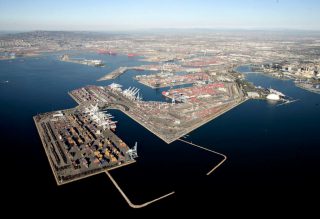 Image Courtesy: Port of Long Beach
Pollution around the Californian Port of Long Beach (POLB) has been reduced over the last decade, however, terminal congestion in the first quarter of 2015 impacted air quality last year, according to the latest study released by the port.
The 2015 annual inventory of port-related air emissions found the port’s actions to curtail pollution have decreased diesel particulate matter by 84 percent since 2005, a slight decrease from the 85 percent reduction reported in 2014.
Sulfur oxides were 97 percent lower, the same level reported in 2014. Smog-forming nitrogen oxides and greenhouse gases were down 48 percent and 14 percent, respectively, compared to the 50 percent and 21 percent numbers, respectively, in the prior year.
Meanwhile, annual container traffic increased seven percent, or 296,000 TEUs, during the same period.
 The rise in emissions was attributed to the unusual number of vessels at anchor due to terminal congestion in early 2015. While at anchor, ships use auxiliary engines to run essential systems instead of plugging into shore electrical power available at berth.
“The latest emissions inventory shows the effects of last year’s congestion and increased ships at anchor. Thanks to labor and shipping partners, we cleared the backlog quickly,” Lori Ann Guzmán, Harbor Commission President, said.
POLB’s efforts to improve air quality since 2005 have included the Clean Trucks Program, low-sulfur fuel regulations for ships, increased use of shore power for cargo ships and the port’s Green Flag Vessel Speed Reduction Program.
In addition, POLB said it continues to reduce emissions through the use of on-dock rail, use of advanced technologies, and joint efforts with Port of Los Angeles on Supply Chain Optimization and development of the next update to the Clean Air Action Plan.
Initially created in 2006 and currently entering the third iteration, the Clean Air Action Plan (CAAP) outlines strategies to reduce pollution from ships, locomotives, trucks, terminal equipment and harbor craft that move cargo.
The annual “emissions inventory” is reviewed by the US Environmental Protection Agency, California Air Resources Board and South Coast Air Quality Management District.