LR: Time to Adapt to New Emission Caps Fast Running Out
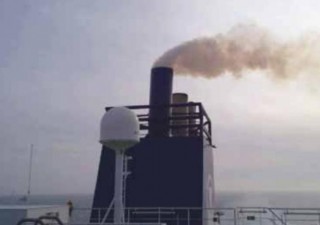
Lloyd’s Register has issued new emissions guidelines and updated technical information to help operators in their investment decisions ahead of the enforcement of a global 0.5% cap for SOx emissions.
The time for decisions is fast approaching. If in 2012, when an earlier version of this report was issued, the industry needed to start considering their options, today, in 2015, time is running out. The compliance options are clear. Ship operators need to evaluate compliance strategies specific to their ships, operation and risk criteria.
With key dates looming - 2016 NOx compliance and IMO’s 2018 review of fuel availability, the new guidance focuses on exhaust gas treatment (scrubbers), as well as the wider scope of options for SOx/NOx compliance beyond exhaust gas treatment.
In the majority of the tanker, bulk carrier and container segments the uptake of scrubber technology remains slow. With shorter periods inside Emission Control Areas (ECAs), lower fuel consumption (especially due to slow steaming) and typically lower asset residual values, the business case for installing scrubber technology on deep sea tank, bulk or container ships is not, yet, either strong enough or urgent enough.
The bunker price collapse during 2014 has been another factor. While the price difference between heavy fuel and distillates has remained relatively constant, the fuel costs inside ECAs have reduced giving operators more time to consider their options.
Recently, several suppliers have released new hybrid fuel products for ECA compliance. These are aimed to address the operational risks of operating on distillates but they also present several challenges of their own.
Looking ahead, there are two key years: 2016 and 2018. Ships constructed after January 1, 2016 will need to comply with NOx Tier III when trading to US/Canada. Other ECAs for NOx may be introduced in the future affecting, however, only newly constructed vessels.
In 2018, IMO will publish a fuel availability study determining whether the global 0.50% sulphur limit will enter into force in 2020 or 2025. If it is 2020, the implications will be widespread: a possible rapid uptake of scrubber technology (with a question mark on whether supply could cover the demand) and the potential for a dramatic increase in operational costs for those who choose to operate on distillate fuels, according to LR.
Whether LNG will make the leap from niche fuel to mainstream is a big question. Early adopters of LNG-as-fuel could start seeing a real return on their investment and any ‘LNG-ready’ ships may start converting to LNG-fuelled, if and when the bunkering infrastructure develops sufficiently.